


Safe Food Network Labeling
AVOIDS ANOTHER “SOFT TRADE” BARRIER
By Stanley U. North, III Esq., Law Firm Of Stanley Underwood North LLC
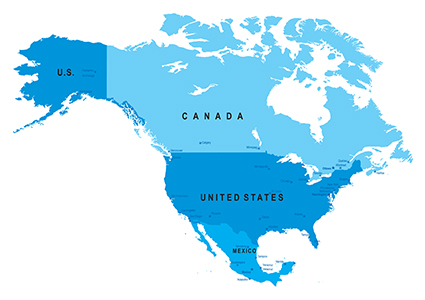
Today, about one-fourth of all U.S. imports, such as crude oil, machinery, gold, vehicles, fresh produce, livestock and processed foods, originate from Canada and Mexico, which are the United States’ second- and third-largest suppliers of imported goods. In addition, approximately one-third of U.S. exports, particularly machinery, vehicle parts, mineral fuel/oil and plastics, are destined for Canada and Mexico. To facilitate this trade, in January 1, 1994, the North American Free Trade Agreement (NAFTA) was enacted which eliminated most tariffs on trade between Mexico, Canada and the United States. NAFTA’s purpose was to encourage economic activity between North America’s three major economic powers. Numerous tariffs, particularly those related to agriculture, textiles and automobiles, were gradually phased out between Jan. 1, 1994 and Jan. 1, 2008. NAFTA was supplemented by two other regulations: the North American Agreement on Environmental Cooperation (NAAEC) and the North American Agreement on Labor Cooperation (NAALC). These side agreements were intended to prevent businesses from relocating to other countries to exploit lower wages, lenient worker health and safety regulations, and looser environmental regulations. NAFTA did not eliminate regulatory requirements on companies wishing to trade internationally, such as rule of origin regulations and documentation requirements that determine whether certain goods can be traded under NAFTA. The free-trade agreement also contains administrative, civil and criminal penalties for businesses that violate any of the three countries’ laws or customs procedures.
President Trump campaigned on a promise to repeal NAFTA and other trade agreements he deemed unfair to the United States. On September 30, 2018, the three countries agreed to replace NAFTA with USMCA – The United States Mexico Canada Agreement—that will maintain duty free access for agricultural goods on both sides of the border and eliminate non-tariff barriers while encouraging more agriculture trade between Mexico.
Importantly, USMCA does not modify the regulatory scheme that foods traded among the three countries meet each country’s separate food labeling requirements. Thus, a food product imported from outside North America will be refused at the border of any of the three countries unless it meets their food label requirements.
Looking to the future, food producers seeking to service the North American market are taking notice of the FDA’s recent finding that Canada has an equivalent food safety system to that of the United States. Further, progress is being made such that in the future, Mexico’s food safety system is also expected to be found to be equivalent to that of the United States. Reacting to these trends, food producers seeking to exhibit at the 2019 Summer Fancy Food Show at the New York City Javits Center are considering creating a composite single label for their food products that would meet all the labeling requirements of the USA, Canada and Mexico. Such a three-country compliant label is actually a lesser effort than what has been done in Europe where five language or more labels are common place and the European Union Common Market has a unified food labeling regime. In contrast, a three-country United States, Canada and Mexico composite regulatory compliance review could be undertaken to ensure that the food labeling requirements of each of the three countries are met by the single composite label. Such tri-country composite compliant food labels would avoid the added costs and delays of the alternative current practice of labeling food products on a “country by country”, “step-by-step” and “shipment by shipment” process. The author believes that adoption of a tri-country composite label will add significant value to all members of the supply chain network seeking to service the North American market, as outlined below.
Selected Tri-country Composite Food Label Best Practices:
Creating a food label that meets the requirements of all three countries is a study in adopting best practices of each of the United States, Canada and Mexico.
Language:
Such a composite label would have to be in three languages, namely English, French and Spanish. Currently, it appears that describing ingredients, nutritional facts and allergens in three languages can be readily accomplished with unappreciated benefits including that consumers in the United States and Canada speaking only Spanish are able to obtain fuller disclosure in their native language of what is contained in the food being consumed.
Allergens:
The United States recognizes only 8 allergens requiring label disclosure while Canada and Mexico recognize 4 more additional allergens. It appears easy to implement a composite label disclosure for the composite 12 allergens that readily enhances consumer safety by implementing the allergen best practice disclosure of the three countries. The three countries themselves seem to be moving towards adoption of broader allergen disclosure to catch up with such food producer allergen disclosure best practices.
Serving Size Nutrition Disclosure:
The disclosure of the nutrients contained in a standardized 100 grams of food product appears to be an administratively simple best practice but has not persuaded the U.S. FDA which since May 2016 has required the nutritional disclosure of what it deems to be realistic serving sizes updated to current commercial practices. Further, in a unique twist, the FDA has assessed what it believes to be actual consumer practices in food product consumption in a single eating experience and requires in a second column the nutritional disclosure of the entire package if that food package contains 3 or less servings, what is termed the “Goldilocks” disclosure of food packages that are not too small but not too big but just right to eat in a single setting.
Fancy Food Show:
A tri-country composite compliant food label would permit exhibitor food products to be immediately introduced into the USA, Canada and Mexico either in phases or simultaneously. The Fancy Food Show would be expected to attract a broader range of both (i) food retailers (i.e. “buyers”) from Canada and Mexico seeking products for resale in their home markets without a delay that otherwise comes from creating compliant labels in a country-country “step-by-step” basis; and (ii) food produce exhibitors (“suppliers”) whose specialty products bearing a tri-country composite label would in turn have a broader unified three-country consumer retail market that would not be divided by label restrictions.
Food Producers:
Large established food producers have already invested to have in place the added overhead to be able to create and manage their food products on a “country-by-country”, “step-by-step”, “shipment-by-shipment” labeled basis. Accordingly, it is expected that they will adopt tri-country composite food product labels only in a phased in manner. First time food producers within North America and foreign food producers importing into North America for the first time are expected to make the additional investment to create a tri-country composite label so that their product can be distributed across the borders of the United States, Canada and Mexico without the prohibitive cost of relabeling or adding label stickers.
Food Retailers:
Food retailers bear significant costs in their current practice of purchasing, shipping, warehousing and distributing identical food products bearing country specific labels that are limited to sale in a single country because the label on the product meets only a single country’s labeling requirements. For example, it is a common practice to treat North America not as a unified market but on a country by country basis, ordering the same food product in smaller quantities of three different versions [USA, Canada and Mexico labels], to be shipped in those more expensive smaller quantities to three different ports of entry [Port New York/Newark; Halifax and Veracruz], to be stored in different country warehouses, all bearing the risk of “stranded assets” because the food product, once labeled, cannot be rerouted if anticipated market demand is low in one country but higher in another. In contrast, a tri-country composite compliant food label would permit the retailer to place a single larger quantity order, shipped in larger container shipments, to a single port of entry potentially to be subjected to a single FSVP verification and customs inspection, stored in a single North American warehouse and interchangeably distributed throughout all three countries.
Trans Ocean Shipping Companies:
It costs more to manage the routing of containers with the same food product with the same harmonization code but with country specific labels due to the extra efforts required to seek to avoid the confusion that can arise when the apparently identical product is delivered to a country with the wrong non-compliant food label. The alternative supply chain structure of making smaller quantity shipments of country specific labeled food products to more ports of entry costs more and exposes the food producer to the risk of “stranded assets” when demand for the product is higher across the border but the food product package bears a non-compliant label for that country. A tri-country composite compliant food label would permit the shipping company to consolidate the identical product potentially to deliver the entire quantity to a single port of entry in dramatically less time freeing up its limited resource shipping capacity.
Blockchain Distributed Network Compatibility:
Tri-country compatible food labels permit the food producer to have a more flexible food distribution supply chain as the food product can be sold within any of the North American markets. Adopting such a tri-country label is also an opportunity for the food producer to implement a blockchain distributed network with all the distribution supply chain participants ending with the “next to last mile” retail food customer and even extending to the ultimate end use consumer. Walmart, which sells 20 percent of all food in the U.S., has just completed two blockchain food safety pilot projects. Prior to using blockchain, Walmart conducted a traceback test on mangoes being offered for sale in one of its stores. It took six days, 18 hours and 26 minutes to trace those mangoes back to its original farm. By using blockchain distributed networks, Walmart could provide all the traceback information in 2.2 seconds. During an outbreak of disease or contamination, six days is an eternity. Food producers and food retail customers can save lives by using blockchain distribution network technologies.
Port of Entry; Blockchain Network Compatible:
The North American Ports of Entry compete against each other by seeking to provide to the international food supply chain superior infrastructure including greater capacity, better access to transportation networks, larger accessible consumer markets and faster and lower cost load and unload capabilities. For a port of entry and its associated regulatory inspection regime to become blockchain network compatible permits the port to reduce fraud, improve compliance, reduce overhead costs and permit the existing infrastructure to be more productive. Thus, becoming blockchain network compatible provides a further infrastructure competitive advantage. Adapting to the adoption of a tri-country composite compliant food label appears to simply increase the efficiencies of the blockchain network and the benefits of its adoption.
Regulatory Compliance:
For the regulatory inspection regime to become blockchain network compatible at a port of entry in the United States, Canada or Mexico permits the regulatory agency at that port to reduce fraud, improve compliance, reduce overhead costs and permit the existing regulatory staff to be more productive. By itself, adapting to the adoption of tri-country composite compliant food labels appears to have the potential beneficial effects of more effective collaborative product recall procedures and creates an impetus to converge each country’s best label disclosure practices.
FSVP Importers Go Beyond the Retail Food Product Label:
The US Food Safety Modernization Act (FSMA) enacted in 2011 implemented a Food Supplier Verification Program (FSVP) that requires imported food producer/suppliers to appoint an FSVP Importer to verify that the imported food meets US food safety standards. Starting May 30, 2017, the FDA began implementing the FDA’s FSVP which is intended to be a flexible, risk-based program to verify foreign suppliers and the safety of the food they produce. FSVP requires the foreign food producer/supplier to appoint a US based “FSVP importer” for food products imported by the foreign supplier into the U.S. The FSVP Importer is responsible for establishing foreign supplier verification programs to verify that that the foreign suppliers are using safe processes and procedures and that the food produced by the foreign supplier at its facility is not adulterated or misbranded. FDA identifies the following as examples of verification activities: on-site auditing, sampling and testing of a food, review of the foreign supplier’s relevant food safety records, and other activities that are appropriate based on the evaluation of the risk posed by the foreign supplier products and performance. The FSVP importer must be a U.S. party and could have a direct financial interest in the food product such as the U.S. owner or consignee who, at the time of entry, owns the food, has purchased the food, or has agreed in writing to purchase the food. Retail customers without expertise in food manufacturing safety systems often decline to take on the FSVP Importer role. Further, if the food is being imported for food trade show exhibitions, there is no U.S. owner or consignee at the time of entry. In either of these cases, the foreign owner of the food must appoint a U.S.—based agent to act as the FSVP Importer responsible for conducting the required supplier verification activities.
To contact Stanley North about this labeling initiative or other legal matters regarding food safety, e-mail snorth3@yahoo.com or call + 973-226-1982 in the U.S. or visit his website at SUN3law.com